


What's in the news this month - December 2025
In this month’s Enews, we look at the major tax and spending decisions announced in the Autumn Budget. The reliability of AI tools comes under scrutiny, the latest advisory fuel rates are revealed, as are updates to the penalty regime for Making Tax Digital (MTD) for Income Tax, and amendments to the Employment Rights Bill. Other topics covered include e-invoicing for VAT-registered businesses, the cost of Covid fraud to UK taxpayers, and the readiness of sole traders for the next stage of MTD.
If you have any questions about any of the below please do get in touch with your Old Mill adviser in the first instance, or alternatively click here…

16th December 2025
-
Chancellor raises £26 billion in Autumn Budget
Chancellor of the Exchequer Rachel Reeves set out tax-raising measures worth up to £26 billion in the Autumn Budget.
The increases will be achieved through a range of measures, including extending the freeze on Income Tax thresholds for a further three years.
Ms Reeves also announced extra spending increasing to £11.3 billion in 2029/30, including an extra £9 billion on welfare.
Despite the uplift in spending the Chancellor has more than doubled her fiscal headroom from around £10around to around £22 billion, according to the Office for Budget Responsibility (OBR).
The OBR overshadowed the Chancellor’s speech with the accidental publication of its main measures prior to the Budget being announced in Parliament.
On Income Tax the personal allowance, the higher rate threshold and additional rate threshold are frozen at £12,570, £50,270 and £125,140, respectively, until 2030/31.
Taxes on property, dividend and saving income – which currently face no equivalent of National Insurance contributions (NICs) – will be increased by up to 2%.
From April 2029, the government will charge employee and employer NICs on any pension contributions made via salary sacrifice above £2,000 a year
The Budget also halves Capital Gains Tax relief for company owners selling their businesses to Employee Ownership Trusts from 100% to 50%.
In addition, the Budget introduced a High Value Council Tax Surcharge on homes worth more than £2 million, while protecting those on low incomes.
Individual Savings Accounts (ISAs) will be reformed from April 2027 when the annual cash limit will be set at £12,000, within the overall annual ISA limit of £20,000.
The Chancellor also took action to cut £150 off energy bills, freeze rail fares and end the two-child benefit cap.
The government is extending the 5p fuel duty cut until the end of August 2026 with rates then gradually returning to March 2022 levels by March 2027.
Ms Reeves said:
‘I can tell you today that, for every family we are keeping our promise to get energy bills down and cut the cost of living with £150 taken off the average household energy bill from April.
‘Money off bills, and in the pockets of working people. That is my choice.’
Internet link: GOV.UK
Please feel free to discuss the Autumn Budget further with your usual Old Mill contact. Get in touch here.
-
AI tools giving risky consumer advice, warns Which?
AI tools including Chat GPT, Gemini and Meta AI are giving inaccurate, unclear and risky advice which could prove costly if followed, warns consumer champion Which?.
Research showed that around half of UK adults are now using AI tools to research topics including personal finance, the law and health.
Which? tested six AI tools – ChatGPT, Google Gemini, Gemini AI Overview (AIO), Microsoft’s Copilot, Meta AI and Perplexity – to establish how well they could answer common consumer questions.
Meta AI received the worst score in Which?’s tests, achieving just 55% overall.
ChatGPT, which is the most used tool according to Which?’s survey, came second to bottom with an overall score of 64%,
Perplexity topped the table with 71%. It received the highest scores for accuracy, relevance, clarity and usefulness of any of the tools on test.
Andrew Laughlin, Which? Tech Expert, said:
‘Everyday use of AI is soaring, but we’ve found that when it comes to getting the answers you need, the devil is in the details. Our research uncovered far too many inaccuracies and misleading statements for comfort, especially when leaning on AI for important issues like financial or legal queries.
‘When using AI, always make sure to define your question clearly, and check the sources the AI is drawing answers from. For particularly complex issues, always seek professional advice – particularly for medical queries, before making major financial decisions or embarking on legal action.’
Internet link: Which? website
-
Advisory fuel rates for company cars
The guidance states: ‘you can use the previous rates for up to one month from the date the new rates apply’. The rates only apply to employees using a company car.
The advisory fuel rates for journeys undertaken on or after 1 December 2025 are:
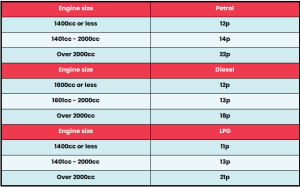
HMRC guidance states that the rates only apply when you either:
- reimburse employees for business travel in their company cars
- require employees to repay the cost of fuel used for private travel.
You must not use these rates in any other circumstances.
The Advisory Electricity Rate for fully electric cars is below. Electricity is not a fuel for car fuel benefit purposes.

If you would like to discuss your company car policy, please contact us.
Internet link: GOV.UK AFR
-
MTD penalties waived for first year of Income Tax
Self assessment taxpayers due to join Making Tax Digital (MTD) for Income Tax next April will not face penalties if late filing quarterly updates.
In the Autumn Budget 2025 documents, the government said it will not charge penalty points if those joining MTD submit any of their compulsory quarterly updates of income and expenses late during 2026/27.
This means that the first group of taxpayers earning non-PAYE income over £50,000 will not be liable for the new penalty regime under MTD until April 2027.
HMRC will apply the new penalty regime for late submission and late payment to all income tax taxpayers from 6 April 2027.
The new system is based on a points-based sanctions regime and will penalise those who persistently do not comply by missing filing and payment deadlines.
Under the new regime, when a taxpayer misses an annual submission deadline, they will incur a penalty point. A taxpayer becomes liable to a fixed financial penalty of £200 only after they have reached the points threshold of two for late submission of their final declaration.
Sharron West, Technical officer at LITRG, said:
‘We’re pleased to see the government defer penalties for the first year of Making Tax Digital.
‘Making Tax Digital is the biggest change to the tax system since self assessment and because of that, we expect that there will be some teething problems when it goes live in April.
‘This period of grace is especially good news for those who will be getting used to the new system without the help of a tax adviser.’
Internet link: CIOT website
-
E-invoicing will be fundamental change for VAT-registered businesses
The mandatory introduction of e-invoicing for all VAT-registered businesses selling to UK business customers from April 2029 will be a fundamental change, says the Chartered Institute of Taxation (CIOT).
The government announced the requirement in the Autumn Budget 2025 policy documents.
It said: ‘Continued collaboration between the government and the private sector is essential for driving innovation. To drive productivity further, the government will require the use of electronic invoicing for all VAT invoices for business-to-business and business-to-government transactions from 2029, with a roadmap to be published at Budget 2026.’
The CIOT is cautioning the government against rushing into mandatory e-invoicing, calling for the use of thresholds and staged implementation to try to mitigate the impact of such significant digital change.
E-invoicing is a digital exchange of invoice information directly between the supplier and customer’s accounting systems; invoices sent electronically by email with a pdf or jpeg format attachment will no longer suffice.
CIOT spokesperson Alison Kerrey said:
‘E-invoicing is a fundamental change for businesses. This goes further than Making Tax Digital, because it is not just digital record keeping, it is communicating digitally with customers and suppliers.
‘We are particularly concerned that those businesses that only issue and receive a handful of invoices per year will face disproportionate costs.
‘The CIOT support moves to increase the adoption of e-invoicing. But if there is to be a mandate, there need to be real benefits to HMRC and UK businesses and sensible, realistic implementation.’
Internet link: CIOT website
-
Sensible solution on unfair dismissal will deliver faster improvements
Reducing the qualifying period for unfair dismissal protection is a sensible move, says the Resolution Foundation.
The government is amending the Employment Rights Bill to reduce the qualifying period for unfair dismissal protection from two years to six months, rather than scrapping altogether for a ‘day one’ right.
This is a sensible move that will speed up the delivery of improvements to working conditions and reduce the risk of firms being put off hiring, said the think tank.
The UK currently has a two-year qualifying period for unfair dismissal protection – meaning workers can be well established in their job but still lack this protection.
According to the Foundation, other rich countries which have unfair dismissal protection typically have much shorter qualifying periods, reflecting the fact that it does not take employers more than a few months to judge whether a new hire is a good fit.
But getting rid of qualifying periods altogether would have been a step too far in the other direction, risking putting employers off hiring, it adds.
Nye Cominetti, Principal Economist at the Resolution Foundation, said:
‘The UK currently has one of the longest qualifying periods for protection which needs to come down. But scrapping it entirely would have meant lurching from one extreme to the other and putting firms off hiring new workers.
‘This sensible move to a six-month qualifying period will bring the UK into line with other countries, deliver tangible improvements to working conditions, and help the government move forward with other key aspects of the Employment Rights Bill.’
Internet link: Resolution Foundation
-
Most sole traders are not ready for MTD changes
The majority of sole traders do not have a clear understanding of Making Tax Digital (MTD) for Income Tax, according to research from IPSE, the self-employed association.
A survey conducted by IPSE found that 70% either have not heard of the initiative or do not realise it requires digital record-keeping and quarterly submissions through approved software.
MTD for Income Tax will come into force in April 2026.
However, IPSE’s survey found that most sole traders are still managing their finances in ways that will not meet MTD requirements. A third continue to use pen and paper for their books, two-thirds rely on spreadsheets, and more than half track income through bank statements.
The timeline for MTD is:
From April 2026: Sole traders and landlords earning over £50,000 must keep digital records and submit quarterly updates through compatible software.
From April 2027: Sole traders and landlords earning over £30,000.
From April 2028: Sole traders and landlords earning over £20,000.
IPSE said:
‘Given the fact that we’ve already had previous delays and considerable resources and time have been invested, HMRC will not be pausing this rollout anytime soon.
‘However, HMRC has a duty to inform as many sole traders as possible – and right now, that awareness campaign is simply not landing.
‘With less than six months until the first deadline, our findings highlight a serious communication gap. Most respondents reported receiving no direct information from HMRC about MTD, which explains why awareness remains so low.’
Internet link: IPSE website
-
Still time to start Self-Assessment returns, says HMRC
Although there are less than two months until the Self-Assessment deadline there is still time to start an accurate return, says HMRC.
In addition, the tax authority is asking people filing their tax return for the 2024/25 tax year ‘What’s your filing style?’.
HMRC is launching an online poll asking people to pick how they choose to file. Are they an early bird – filing within a few days of the new tax year? A dipper – someone who dips in and out throughout the year? Or, a last minute panicker – rushing to submit their form in the last hours of 31 January?
The poll will run on HMRC’s X, LinkedIn and Facebook channels.
Last year more than 11.5 million taxpayers filed their 2023/24 tax return by the 31 January deadline.
Millions of people have already filed their tax return for the 2024/25 tax year, with 58,000 early birds returning theirs on 6 April 2025 – the first day they could.
Myrtle Lloyd, HMRC’s Chief Customer Officer, said:
‘For customers yet to file, there’s still time to start and submit an accurate tax return. Don’t leave something as important as your tax return to the last minute. Go to GOV.UK to start today.’
Internet link: HMRC press release
If you need help with your Self-Assessment submission, please do get in touch.
-
Covid fraud cost UK taxpayer £10.9 billion
Although there are less than two months until the self assessment deadline there is still time to start an accurate return, says HMRC.
In addition, the tax authority is asking people filing their tax return for the 2024/25 tax year ‘What’s your filing style?’.
Taxpayers lost £10.9 billion to fraud and error as the UK government’s pandemic response left the front door open to fraud, according to an independent report.
The Covid Counter Fraud Commissioner, Tom Hayhoe’s, final report to Parliament finds many schemes – including Bounce Back Loans and Eat Out to Help Out – were rolled out with huge fraud risks and no early safeguards – costing the taxpayer millions.
Weak accountability, bad quality data and poor contracting were identified as the primary causes of the £10.9 billion pound losses.
The report highlights that counter fraud controls were ‘inadequate’ and only improved later in the pandemic.
It makes further recommendations to ensure the country is prepared for further crises that need an economic response from government – emphasising that future preparation and robust controls will provide the best value for money for taxpayers.
Chancellor, Rachel Reeves said:
‘Leaving the front door wide open to fraud has cost the British taxpayer £10.9 billion — money that should have been funding our public services, supporting families, and strengthening our economy.
‘We have started returning this money to the British people and we will leave no stone unturned in rooting out the fraudsters who profited from pandemic negligence.’
Internet link: HM Treasury website
If you have any questions about any of the above please do get in touch with your adviser in the first instance, or alternatively click here…