


What's in the news this month - March 2026
In this month’s Enews, we look at the additional tax raised by HMRC’s large business directorate, the removal of tariff exemptions, and a warning over the threat to standards posed by war in the Middle East. There is news on the Chancellor’s announcements at the Spring Forecast, and we update you on the number of taxpayers who failed to make the self assessment deadline, plus what to do if it was missed. With more on Making Tax Digital and preparations, there is a lot to update you on.
If you have any questions about any of the below please do get in touch with your Old Mill adviser in the first instance, or alternatively click here…

16th March 2026
-
HMRC investigations doubles additional tax from large businesses
HMRC’s large business directorate has doubled the amount of tax revenue it collects, according to the National Audit Office (NAO).
A hands-on approach to tax compliance for large businesses yielded £15.8 billion during 2024/25. That is double what the unit collected in 2021/22.
The large business directorate has a return on investment of £95 for every £1 spent on staff pay, which is four times higher than HMRC achieves across all taxpayers.
The tax gap for large businesses has steadily decreased over the long term, from £7.5 billion in 2005/06 to £5.8 billion in 2023/24.
Since 2006, HMRC has put 70 large businesses through its High Risk Corporates Programme, designed to tackle its most complex or riskiest cases. This has brought in more than £32 billion in extra tax.
The NAO recommended that HMRC expands the hands-on approach with other businesses as well as improving its IT systems.
Gareth Davies, Head of the NAO, said:
‘Through its large business directorate, HMRC has developed an efficient and effective approach to ensuring large businesses remain tax compliant. This has made a significant contribution to reducing the tax gap.
‘HMRC should continue to explore whether this approach could usefully be extended to other complex and high-risk businesses.’
Internet link: NAO website
-
HMRC offers time to help pay Self Assessment tax bills
HMRC is sending Self Assessment taxpayers a reminder that help is available to manage their tax bill.
The deadline to file and pay any tax owed is 31 January 2026, but people who are unable to pay in full by then may be able to set up a Time to Pay arrangement online and spread the cost over monthly instalments.
For those with bills of up to £30,000, such an arrangement can be set up without even needing to contact HMRC directly.
According to HMRC, since 6 April 2025, nearly 18,000 payment plans have been set up using the service, helping customers avoid late payment penalties by arranging regular payments that suit their own circumstances.
A Time to Pay arrangement cannot be set up until a Self Assessment return has been filed. If the tax owed is more than £30,000, or a longer repayment period is needed, people can still apply but will need to contact HMRC directly.
Myrtle Lloyd, HMRC’s Chief Customer Officer, said:
‘We’re here to help customers get their tax right. If you are worried about paying your Self Assessment bill, assistance is available. Our online payment plans offer financial flexibility and can be tailored to individual circumstances. We want to support all our customers in meeting their tax obligations with confidence.’
Internet link: HMRC press release
-
Fears over low value imports reform
Removing the UK’s tariff exemption for low value imports could risk pushing up prices, harming small businesses and reducing trade intensity, warns the British Chambers of Commerce (BCC).
The government is considering the move after the US removed its ‘de minimis’ exemption. The EU has also said it will do the same and introduce new handling charges for cheaper packages as well.
A government consultation into the plans closed on 6 March and the BCC has submitted a response.
It said that while the UK must respond to action by the US and EU, to avoid unfair competition from cheaper goods flooding our domestic market, any reforms must be proportionate.
William Bain, Head of Trade Policy at the BCC, said:‘We know the trend globally is to abolish de minimis thresholds and levy duties on low value imports given their huge growth in recent years.
‘The US has scrapped its de minimis threshold, and the EU is planning new charges on cheaper imports from July this year. This will put our exporters’ sales under pressure, and we must respond to ensure we have a level-playing field.
‘But we would urge Ministers not to introduce charges per item or consignment by import. Our research shows the increased costs will feed through into higher prices.‘The government should also retain VAT being charged at point of sale on transactions for these purchases – a practice followed by many countries in global trade. Its retention would avoid unnecessary complications and additional friction on cross‑border e‑commerce sales.’
Internet link: BCC website
-
Growth in living standards threatened by war in Middle East
The UK is set for a decent increase in living standards this year, but energy price shocks caused by war in the Middle East threaten that growth, according to the Resolution Foundation.
The think tank says the improvement in living standards would be a one-off and would particularly benefit lower-income families.
However, the medium-term picture for living standards remains bleak, it adds.
The Foundation says living standards for typical working-age families are set to grow by a decent 0.9 per cent, or £300, over the coming year.
However, the think tank says this good news risks being overshadowed by the domestic fallout from events in the Middle East. If recent rises in the price of oil and gas were sustained, they could add around a percentage point to inflation and £500 on to typical annual energy bills, it adds.
Ruth Curtice, Chief Executive at the Resolution Foundation, said:
‘This coming year is set to be a decent one for living standards, and a bumper one for poorer families, as wages and benefit support rise above the level of inflation. But a fresh energy price shock risks puncturing this good news.
‘With wage growth set to tail off, the living standards picture for the rest of the Parliament is bleak. This should remind policy makers of the need to both navigate near-term uncertainty and support productivity-based economic growth over the medium term. That is the only way to meaningfully lift living standards throughout Britain.’
Internet link: Resolution Foundation website
-
Chancellor says plan is right despite uncertain backdrop to Spring Forecast Statement
Chancellor Rachel Reeves insisted she has the ‘right economic plan’ for the UK in her Spring Forecast Statement announcement.
Ms Reeves acknowledged the economic uncertainty caused by war in the Middle East and pledged to chart a course through the turbulence.
The Chancellor’s speech focused on economic growth, the cost of living and public borrowing.
The Office for Budget Responsibility (OBR) cut its growth forecast for this year to 1.1% from 1.4%. However, it said the economy will grow faster in 2027 and 2028.
The OBR’s forecast shows GDP per person is now set to grow more than was expected in the Autumn Budget, with growth of 5.6% over the course of this Parliament.
In addition, Ms Reeves said she was cutting the cost of living, including reducing people’s energy bills by £150 and freezing rail fares.
The OBR’s forecast shows inflation, borrowing and debt interest are falling, whilst investment is rising.
The Chancellor also said she has cut public borrowing, which the OBR said is down by nearly £18 billion compared to the autumn, with borrowing this year set to be the lowest in six years and falling below the G7 average.
The Chancellor concluded:
‘My plan is the right one. I am in no doubt about how great the rewards can be if we stay the course. The forecasts today confirm that the choices this government has made are the right ones.
‘Stability in our public finances, interest rates and inflation falling, living standards rising, more children lifted out of poverty, more appointments in our NHS, more investment in our infrastructure, a growing economy and more money in the pockets of working people.’
Internet link: GOV.UK
-
One million miss Self Assessment deadline
An estimated one million taxpayers missed the self assessment deadline for the 2024/25 tax year, according to HMRC.
Over 11.48 million taxpayers filed their self assessment tax returns before midnight on 31 January.
However, more than 12 million self assessment taxpayers were expected to file a tax return and pay any tax owed by the deadline.
HMRC says that anyone who needs to file a return and missed the deadline should meet their tax obligations as soon as possible, as late filing and late payment penalties are charged.
The tax authority said that 97.25% of tax returns were filed online with 475,722 taxpayers waiting until the final day to file their return.
On 31 January, 27,456 people submitted their returns in the final hour while the busiest hour for submitting a return was 17:00 to 17:59, when 32,982 people filed.
HMRC advisers handled 5,409 webchats and 10,483 calls to the helplines which, unusually, were opened on a Saturday to provide extra support to taxpayers on deadline day.
Myrtle Lloyd, HMRC’s Chief Customer Officer, said:
‘Thank you to the millions of people and agents who filed their self assessment tax return and paid any tax owed by 31 January.
‘HMRC digital channels are always the quickest and easiest way for people to sort their tax affairs.’
Internet link: HMRC press release
-
Getting tax affairs back on track if Self Assessment deadline was missed
The number of people using the HMRC app to pay their self assessment tax bill has increased by 65% this tax year, according to the tax authority.
Almost 340,000 people have used the HMRC app to pay their self assessment tax since 6 April 2025, an increase of 132,788 people compared to the same period last year, says HMRC.
Self assessment taxpayers need to file their tax return online for the 2024/25 tax year and pay any tax owed by 31 January 2026. HMRC is encouraging those yet to start theirs, to go to GOV.UK and do it now. Anyone who misses the deadline could be subject to an automatic £100 penalty.
HMRC says that filing tax returns ahead of the deadline means knowing how much tax to pay sooner.
The tax authority says it is quick and easy to pay via the HMRC app and set up payment reminders to make sure the deadline is not missed.
Myrtle Lloyd, HMRC’s Chief Customer Officer, said:
‘The self assessment deadline is less than one month away, and thousands of people have already paid their tax bill via the HMRC app. It is quick and easy to do, and you can also see your payment history. Search ‘download the HMRC app’ on GOV.UK to access the app and make your self assessment payment.’
Internet link: HMRC press release
-
Making Tax Digital for Income Tax biggest tax change since Self Assessment
The introduction of Making Tax Digital (MTD) for Income Tax this April will be the biggest change to the UK’s tax system since self assessment, says the Low Incomes Tax Reform Group (LITRG).
From 6th April 2026, taxpayers with more than £50,000 of gross income from self-employment and/or rental income in the 2024/25 tax year will need to comply with the new rules from that date.
Unless they are exempt, taxpayers who meet the income threshold will be required to follow these new rules, which will include keeping digital records, submitting quarterly updates of their income and expenses, and filing an annual tax return using commercial software.
According to HMRC’s data, more than 200,000 unrepresented taxpayers will be required to follow the new rules.
The LITRG has published new guidance to help taxpayers navigate the change.
Victoria Todd, Head of LITRG, said:
‘MTD is the biggest tax change since self assessment and with just over two months to go, time is running out to get ready.
‘Many taxpayers will have the support of a tax adviser or accountant to guide them through the process. But for those who can’t afford professional tax advice, the new rules may seem confusing and the requirements daunting.
‘We want to make it as easy as possible for taxpayers to understand whether the rules apply to them and what they need to do if that is the case.’
Internet link: LITRG website
-
Government urged to scrap ‘unfair holiday tax’
Over 200 hospitality and leisure CEOs have urged the government to scrap plans for a Visitor Levy in England.
In a letter to the Chancellor, they warn that the proposed holiday tax will ‘hit families hardest, put jobs at risk and drain money from local businesses and communities’.
Signatories to the letter warn that ‘holidays are for relaxing, not taxing’, with the proposed tax meaning tourists would face an extra £100 or more for a two-week holiday in the UK.
The letter says this could force families to shorten trips, skip travel altogether or head overseas, spending their money elsewhere.
The letter also says there will be significant damage to local communities across England that rely on tourism for survival, as fewer visitors mean fewer local jobs and lower spending at local businesses.
Allen Simpson, Chief Executive of UKHospitality, said:
‘Holidays are for relaxing – not taxing.
‘Whether you enjoy a city break, a rural retreat or building sandcastles on your beach holiday, you’re already paying your fair share of tax.
‘In fact, it’s one of the highest tax rates for visitors in Europe and the holiday tax will only increase that further.
‘We are so lucky to enjoy these wonderful islands and we should be encouraging people to visit every part of our country – not taxing them for doing so.
‘The government needs to scrap the holiday tax.’
Internet link: UKHospitality website
-
Advisory fuel rates for company cars
New company car advisory fuel rates have been published and took effect from 1 March 2026.
The guidance states: ‘you can use the previous rates for up to one month from the date the new rates apply’. The rates only apply to employees using a company car.
The advisory fuel rates for journeys undertaken on or after 1 March 2026 are:
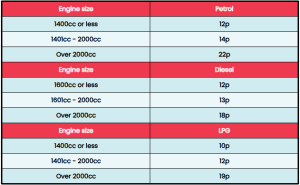
HMRC guidance states that the rates only apply when you either:
- reimburse employees for business travel in their company cars
- require employees to repay the cost of fuel used for private travel.
You must not use these rates in any other circumstances.
The Advisory Electricity Rate for fully electric cars is below. Electricity is not a fuel for car fuel benefit purposes.

If you would like to discuss your company car policy, please contact us.
Internet link: GOV.UK AFR
-
Latest guidance for employers
HMRC has published the latest issue of the Employer Bulletin. The February issue has information on various topics, including:
- Reporting expenses and benefits for the tax year ending 5 April 2026.
- End of year reporting.
- Upcoming State Pension age changes — impact on payroll operation.
- Implementation of the Employment Rights Act 2025.
- Statutory Sick Pay changes — what employers need to know.
- Tax code changes for winter payment recovery.
Internet link: GOV.UK
If you have any questions about any of the above please do get in touch with your adviser in the first instance, or alternatively click here…